01
Smartness cannot be manufactured
Smartness requires time, space, culture, emotion, understanding, empathy, compassion, and love. It cannot be produced in technological labs and injected into cities by Big Tech giants.
By
Dr Shima Beigi
Strategic Advisory
Cities & AI Governance
Working with cities, public institutions, and AI-driven organisations to design governance architectures for digital transformation — placing human agency, civic life, and long-term resilience at the centre of technological change.
EU AI Act Advisory · Human–Machine Governance ·
Urban Intelligence Frameworks · Urban Resilience
I · Prologue
The term smart cities is most often associated with the integration of ICT into urban environments.
While writing Mindful Smart Cities, I found myself returning to a deeper question: where did this idea of the “smart” city actually come from?
For those working in smart city development, this question may seem counter-intuitive, even unnecessary. The focus is usually practical: smart homes, smart energy, smart mobility, data platforms, sustainability targets, and the technological systems that promise to make cities more efficient.
Here, however, I want to step back.
Rather than begin with standard definitions or established models, I want to trace the roots of the smart city itself. To understand its emergence, we must first look at the socio-technological condition from which it arose: the Network Society.

II · The Philosophical Core
The vision of a Mindful Smart City is not simply to use technology to improve urban life.
It is to do so in a way that protects and deepens our humanity, rather than reducing it to a sequence of algorithmic calculations.
To build such a city, we must first understand the complex morphology of the Network Society, learn from the failures and misconceptions of technological urbanism, and course-correct toward a civic vision of the city as a sanctuary for social renewal.

III · Case Study
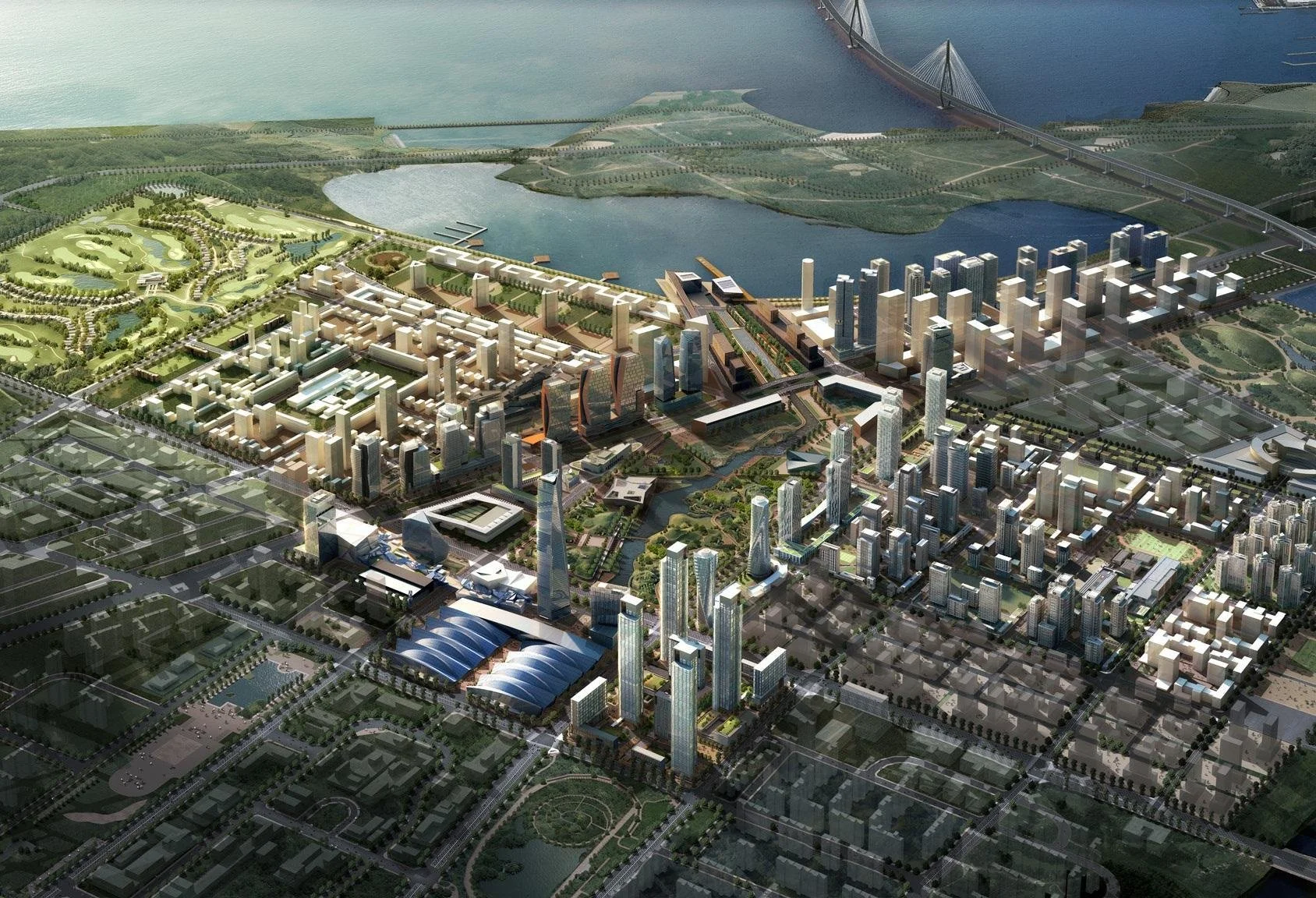
Built on reclaimed land in the Incheon Free Economic Zone, Songdo IBD was designed as a model of technocentric urbanism — sensor-saturated, corporately managed, and largely empty of the social life it promised.
$35B invested — 63% vacant — 1,500 acres reclaimed
IV · The Shift
During the 1990s, governments began to sense a loss of centrality as digital networks opened new spaces beyond the direct reach of traditional institutions.
Something was happening. Something was dissolving, or perhaps more accurately, transforming into a different order.
At a collective level, citizens were becoming newly aware of their civic rights. They began to question inherited models of governance and the legitimacy of top-down, hierarchical power structures.


The real issue was not technological.
V · The Real Discovery
Communities were not merely adapting to digital clusters. They were discovering voice, agency, and collective power within a new environment.
They were not simply trying to circumvent governments. They were searching for something deeper: belonging, recognition, and orientation in a rapidly changing world.
This shift revealed subtle transformations taking place at the deepest layers of society, exposing a gap that top-down authoritative structures were no longer equipped to address.
VI · Why It Was Built
The principal reason is technology companies’ inherent interest in expanding their business proposition and turning the city into an extension of their client.
In such a view, the city is seen as a mechanical, soul-less machine that technology providers and stakeholders can commercialise. Another particularly important reason is the assumption that with digitalisation, the world is moving towards knowledge economies — and cities, therefore, need to modernise as fast as possible.
Building from scratch by reclaiming large amounts of land from nature, often mindless to previous traditions, rituals and informal settlements, and partnering with construction and ICT companies are the common ways to build these projects.


VII · Who Built It
Songdo was built through partnerships between local government, urban developers, and global technology companies, with IBM, Cisco, Siemens, Intel, and Samsung supplying the technological backbone.
The city became an extension of the client: a place planned as infrastructure, optimised as a system, and delivered as a product.
VIII · Five Failures · One Root Cause
01
Smartness requires time, space, culture, emotion, understanding, empathy, compassion, and love. It cannot be produced in technological labs and injected into cities by Big Tech giants.
02
Songdo presupposes that future citizens will use smart technologies for almost all aspects of their lives. The technologically educated are welcome; everyone else is excluded.
03
Replacing soft technologies — like learning about better behaviours or becoming more mindful — with solely hard or deep technologies is disempowering. It betrays the promise of the Internet Age.
04
In the technocentric view, the city is a mechanical, soul-less machine that technology providers and stakeholders can commercialise. Citizens are variables. Culture is noise.
05
Informal settlements and cultural richness are eradicated because they are not deemed valuable to the profit-driven model of technocentric smart cities. What was there is treated as an obstacle.
— Root Cause
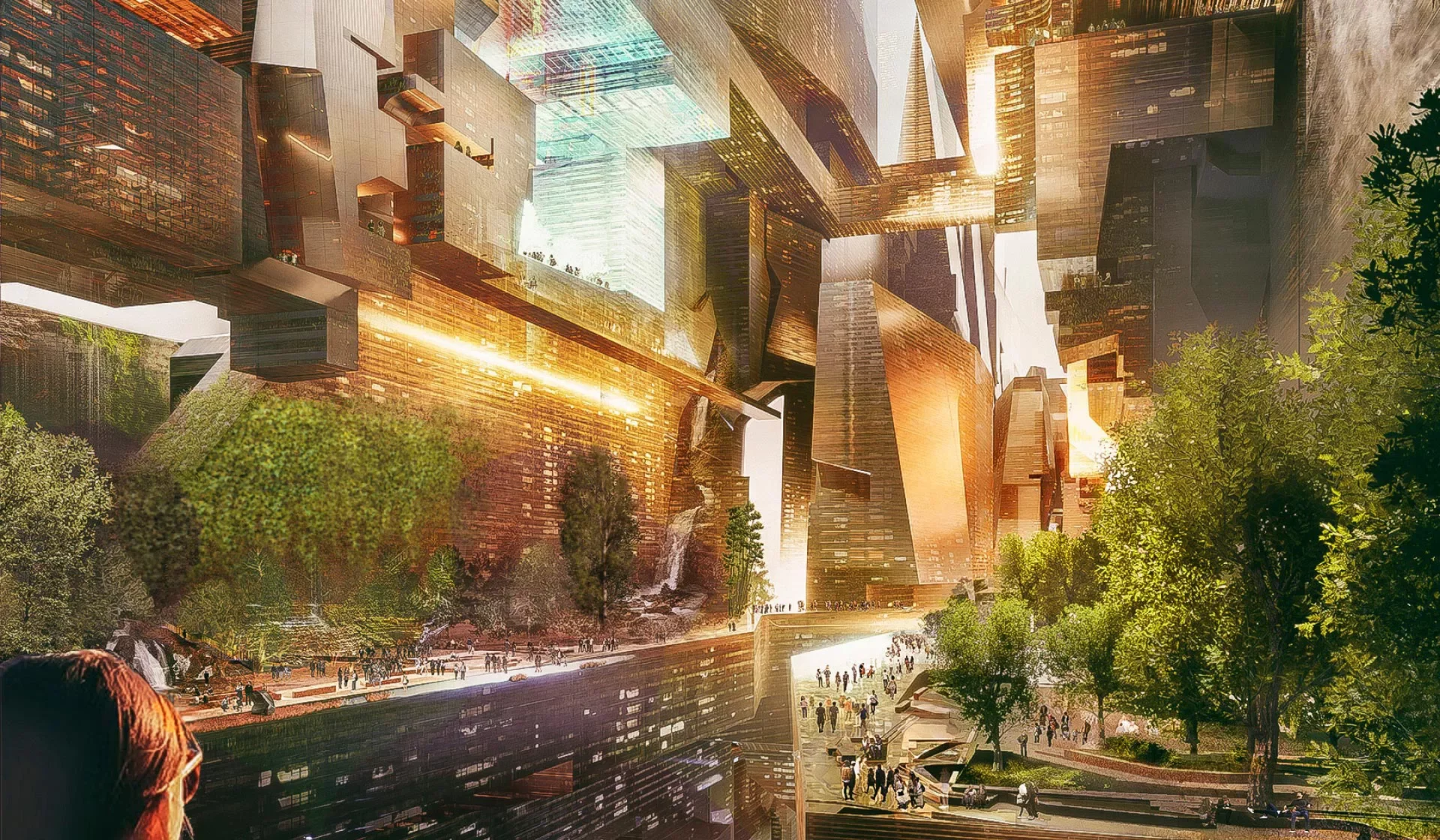
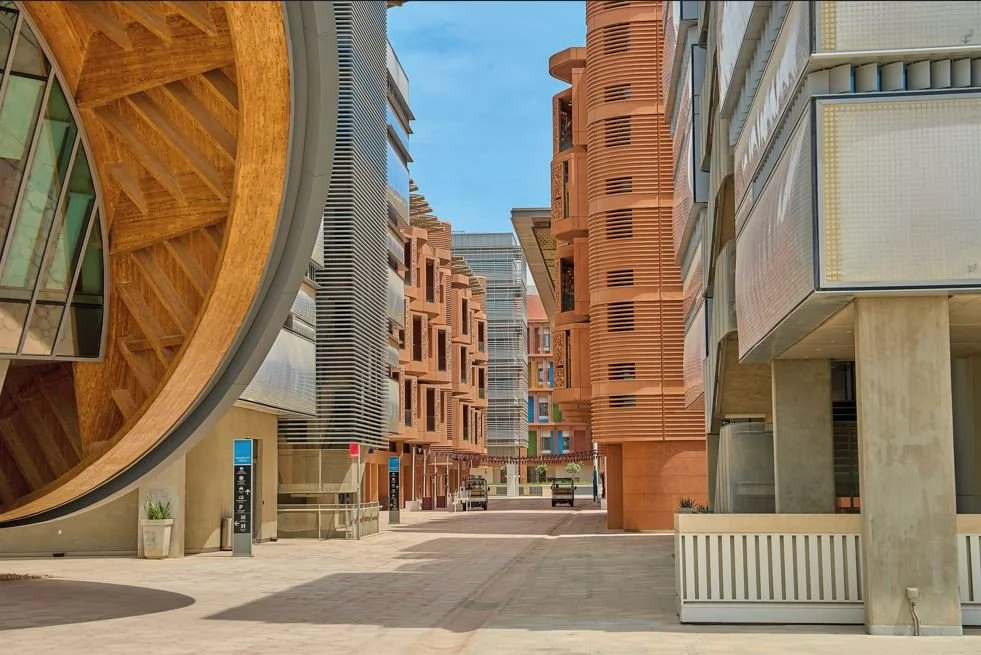
NEOM, Masdar, Hudson Yards. The pattern is not execution failure. It is paradigm failure — and it is accelerating.
IX · The Pattern
Songdo is not an outlier. It is the prototype. The same logic is now spreading across the globe: clear the land, install the sensors, attract the tech-literate, and call the result a city.
X · The Realisation
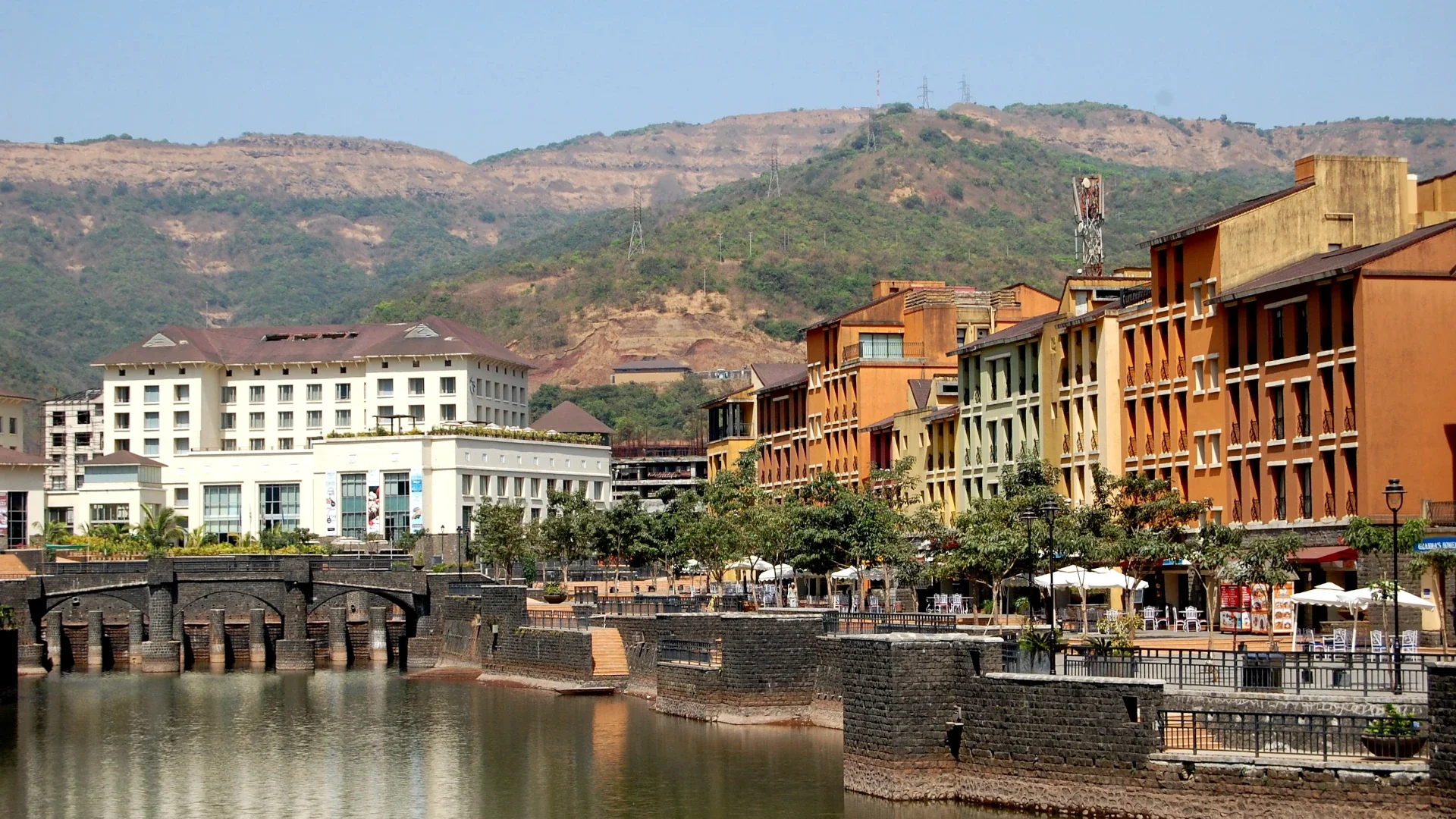
It failed because the city was imagined as a soulless machine.
And cities are not machines.
Technocentric
Mindful Smart Cities
Smartness cannot be manufactured in technological labs and injected into cities by Big Tech giants. Building smartness requires time, space, culture, emotion, understanding, empathy, compassion, and love.
Agentic Cities Advisory
I work with city initiatives and municipal authorities ready to move beyond conventional technology-driven smart city models. My advisory provides a strategic architecture for integrating human wellbeing, ethical AI, and mindful design into urban transformation.